

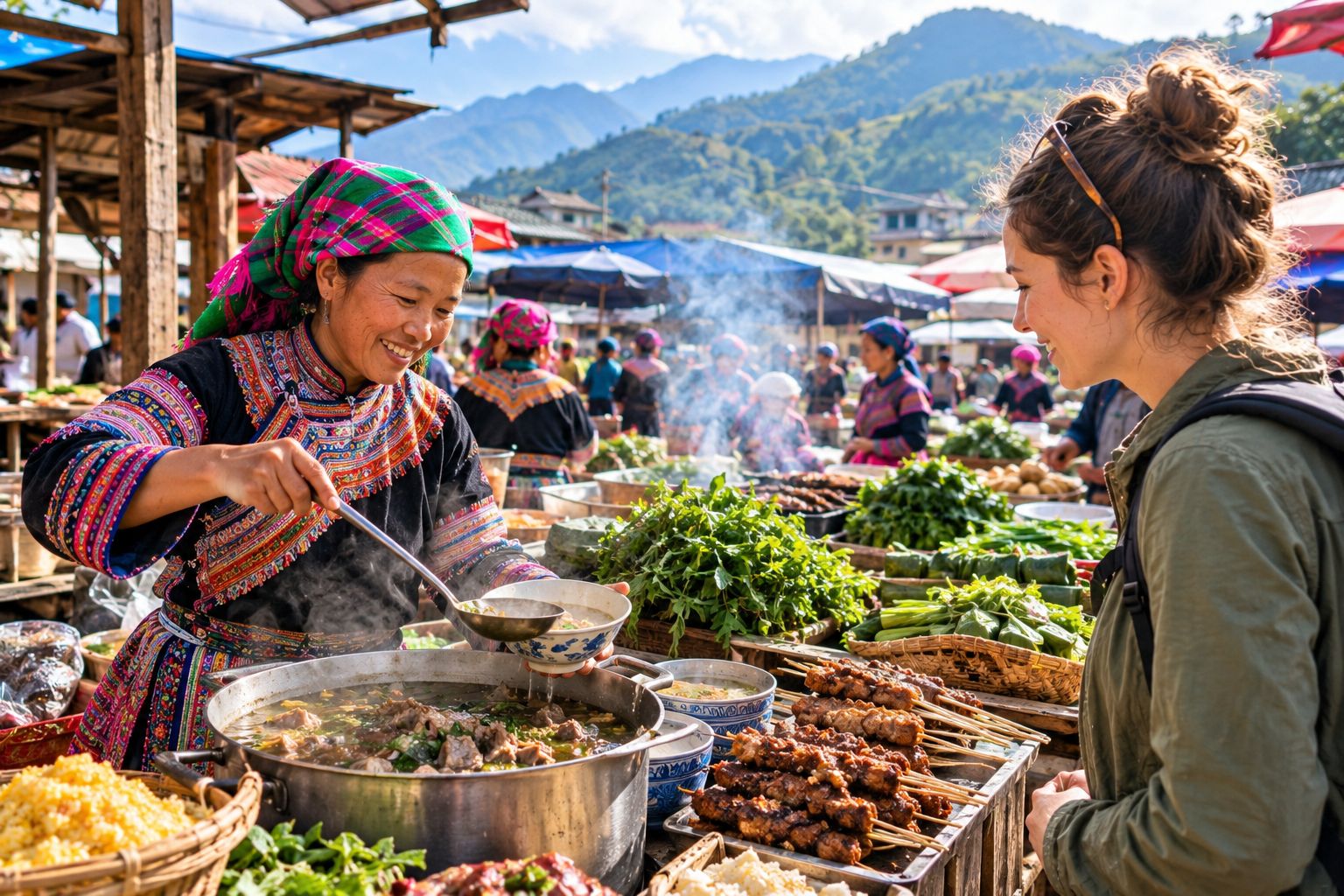
What to Eat at Bac Ha Market: 10 Local Foods to Try
Visiting a traditional market is one of the best ways to discover the food culture of Northern Vietnam. In the mountainous town of Bac Ha, a Sunday market brings together local residents, traders, farmers, and visitors from surrounding communities.
Beyond its colorful clothing and regional handicrafts, Bac Ha Market offers a glimpse into everyday food traditions. Stalls and food vendors may serve hot noodle soups, rice dishes, grilled foods, corn-based products, and other regional specialties.
For travelers wondering what to eat at Bac Ha Market, the experience is about more than finding a memorable meal. It is also an opportunity to learn how local ingredients, mountain agriculture, and community traditions shape the cuisine of this part of Vietnam.
This guide introduces dishes and food experiences worth looking for, along with practical tips to help you explore the market respectfully and confidently.
1. Thang Co: A Traditional Highland Specialty
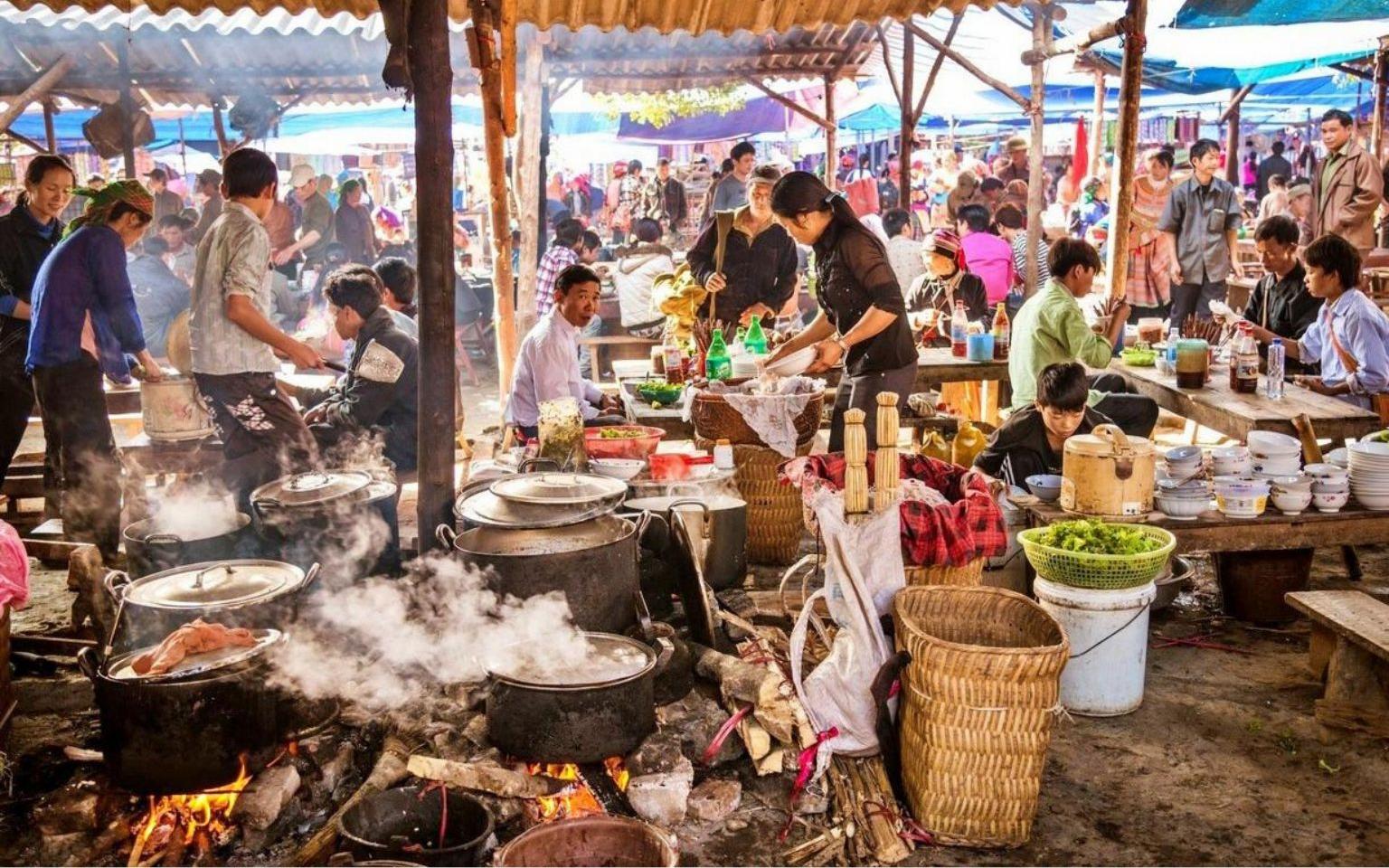
Thang co is one of the best-known traditional dishes associated with the highland markets of Northern Vietnam. It is particularly connected with Hmong culinary traditions and is often mentioned in discussions of Bac Ha’s regional food culture.
Traditionally, thang co is a slow-cooked stew made with animal meat and offal, herbs, and spices. Recipes vary between communities and vendors, so the ingredients and flavor can differ from one pot to another.
What does thang co taste like?
Thang co is generally savory, rich, and aromatic. Its distinctive flavor comes from the cooking method and the combination of herbs and spices.
For visitors who are accustomed to familiar Vietnamese noodle soups, this dish can offer a different culinary experience. However, its traditional ingredients may not suit everyone.
Should you try it?
If you enjoy regional cuisine and are comfortable eating meat and offal, thang co may be worth considering.
Before ordering, ask the vendor what the dish contains. Choose a stall where food is handled carefully and served at an appropriate temperature. If you prefer not to eat offal, ask whether another dish is available.
Thang co is not simply a tourist attraction. It is part of a wider food tradition, and recipes should be understood in their local context rather than judged against a single standard.
2. Pho and Local Noodle Soups
A steaming bowl of noodle soup can be a comforting choice on a cool morning in the northern mountains.
Depending on the vendor, you may find pho or other noodle dishes prepared with broth, herbs, vegetables, and meat. The exact selection changes, so do not expect every stall to serve the same menu.
Why eat noodle soup at the market?
Market food offers a chance to observe how people begin their day. Local residents may stop for breakfast before shopping, selling goods, or traveling back to nearby villages.
Eating where locals eat can also introduce you to flavors and preparations that differ from those in restaurants designed primarily for tourists.
Tips for ordering
- Ask which meat is used in the broth.
- Check whether the dish contains ingredients you avoid.
- If you cannot eat spicy food, request no extra chili.
- Choose food that is freshly prepared and served hot.
- Carry cash in small denominations for convenient payment.
If you have dietary restrictions, explain them clearly. Vegetarian options may be limited at some traditional market stalls, so consider bringing a suitable snack as a backup.
3. Men Men: A Traditional Hmong Corn Dish
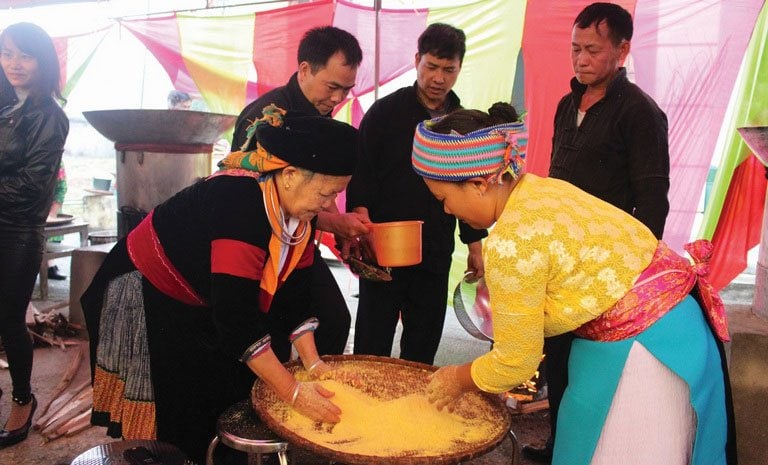
Men men is a traditional food associated with Hmong communities in parts of Northern Vietnam. It is commonly prepared from ground corn that is cooked until tender.
Corn has long been an important crop in many highland areas, where geography and local growing conditions influence the ingredients used in everyday meals.
What is men men?
Men men is made by processing corn into a coarse meal and cooking it, often through steaming. The texture is different from ordinary rice and can be relatively dense or crumbly, depending on the preparation.
It may be eaten with soup, vegetables, or other dishes. Preparation and serving styles can vary from household to household.
Why is it worth trying?
For travelers interested in food history, men men provides insight into the relationship between agriculture and cuisine.
It is also a reminder that traditional food is often shaped by locally available crops rather than by restaurant trends. Corn-based dishes can be especially meaningful in mountainous communities where corn has played an important role in farming and household food traditions.
Availability at the market is not guaranteed, so ask vendors or a local guide if you would like to try it.
4. Grilled Meat and Skewers
The smell of grilled food can be one of the most inviting parts of a market visit. Depending on the stalls operating that day, you may encounter skewers of meat, grilled cuts, or other foods cooked over charcoal or an open flame.
These dishes are convenient for travelers who want a quick snack while exploring.
What should you look for?
Look for food that is cooked thoroughly and served hot. Observe how raw and cooked ingredients are stored and handled, and avoid food that has been sitting uncovered for a long time.
If you do not eat pork or have other dietary restrictions, ask about the meat before ordering. Marinades and seasonings may also contain ingredients you do not expect.
Is grilled food a good market snack?
It can be, particularly if you want to sample several small dishes rather than sit down for a full meal.
Share portions with your travel companions if appropriate, and leave enough time to enjoy the market without eating too quickly.
5. Sticky Rice and Rice-Based Snacks
Rice is a central ingredient in Vietnamese food, and rice-based dishes are common across many regions of the country.
At a highland market, you may find sticky rice or other rice-based snacks, depending on the vendors and season. Some versions are simple and filling, while others may be served with savory accompaniments.
Why sticky rice is popular
Sticky rice is portable, satisfying, and suitable for eating while traveling. It can be prepared in different colors and styles using regional ingredients, although specific varieties are not available at every market.
In Northern Vietnam, rice-based dishes may be served for breakfast, as snacks, or alongside other foods.
How to enjoy it
If you see freshly prepared sticky rice, ask about the ingredients and serving size. It can be a convenient option if you want something simple before exploring the market or continuing your journey into the countryside.
Travelers with allergies should ask about toppings and preparation methods rather than assuming a dish contains only rice.
6. Local Vegetables and Seasonal Produce
One of the most interesting ways to experience Bac Ha Market is to look beyond prepared meals and explore the fresh produce.
Depending on the season, local vendors may sell leafy greens, herbs, vegetables, fruit, and other agricultural products from surrounding areas.
What can seasonal produce tell you?
The products available at a market reflect the agricultural conditions and growing seasons of the region. Mountain climates, rainfall, altitude, and local farming practices all influence what is harvested and sold.
You may notice produce that is less familiar than the vegetables commonly found in supermarkets or international restaurants.
Can travelers buy fruit and vegetables?
Yes, if vendors are selling them and you can transport them safely. Ask about prices before purchasing and wash produce with safe water before eating it raw.
If you are taking a long journey afterward, consider buying only what you can consume or store appropriately.
Fresh produce can be one of the simplest ways to appreciate the relationship between Bac Ha’s rural economy and its food culture.
7. Local Corn Products
Corn is an important ingredient in the food traditions of many northern highland communities. At Bac Ha Market, visitors may encounter corn in different forms, depending on the season and the sellers present.
Corn can be processed into flour, cooked into traditional dishes, or used in other local food products.
Why corn matters in highland cuisine
The importance of corn reflects the relationship between food and the mountain environment. In areas where growing conditions and household farming practices differ from those of the lowlands, corn has historically contributed to daily meals and local food production.
Learning about these ingredients adds context to the food you see at the market.
What should you ask vendors?
If you are interested in a particular corn product, ask how it is prepared and how people traditionally eat it. A local guide can help explain the difference between products and dishes whose names may be unfamiliar to visitors.
Remember that not every traditional product will be available every Sunday.
8. Traditional Corn Wine: A Regional Food-Culture Experience
Traditional corn wine is associated with the Bac Ha region and is part of the area’s wider food and drink heritage.
Production methods vary, but the process commonly involves fermenting corn and distilling the resulting mixture. Local knowledge, ingredients, and techniques influence the final product.
Is corn wine worth learning about?
For travelers interested in regional traditions, learning about corn wine can provide insight into local agriculture, fermentation, and community food practices.
However, tasting alcohol is entirely optional. You can ask about the production process without drinking it, and you should never feel pressured to accept a sample.
Drink responsibly
If you choose to drink, consume alcohol moderately and avoid drinking before driving, riding a motorbike, trekking, or undertaking other activities that require coordination and attention.
Travelers who are pregnant, taking medications that interact with alcohol, or avoiding alcohol for personal or health reasons should skip tasting.
A responsible food experience respects both the tradition and each visitor’s individual choices.
9. Regional Meat Dishes and Hearty Market Meals
Depending on the stalls available, you may find hearty meat dishes served with rice, vegetables, broth, or other accompaniments.
The ingredients and cooking methods vary, reflecting the different culinary traditions found across Northern Vietnam.
Rather than expecting a fixed list of dishes, approach the market with curiosity. Ask what is popular locally that day, how the dish is prepared, and whether it is suitable for your dietary needs.
How to choose a meal
A few simple checks can make your experience more comfortable:
- Choose food from vendors who handle ingredients hygienically.
- Prefer dishes that are cooked thoroughly.
- Ask about the type of meat and any unfamiliar ingredients.
- Check the price before ordering.
- Avoid raw or undercooked foods if you are uncertain about their preparation.
Food safety matters, particularly when traveling in remote areas where medical services may be less accessible than in larger cities.
10. Tea, Coffee, and Simple Refreshments
After walking around the market, a hot drink can be a welcome break. Depending on what is available, you may find tea, Vietnamese coffee, bottled water, or other simple refreshments.
Vietnamese coffee is known for its strong flavor and can be served in different styles. Tea, meanwhile, is part of everyday hospitality throughout much of the country.
Take a break and observe the market
Rather than rushing from stall to stall, find a suitable place to sit and watch the market’s daily rhythm.
You may see residents catching up with friends, traders arranging goods, or families shopping for food and household supplies. These ordinary moments can reveal as much about local life as the most famous attractions.
If you photograph people during your break, ask permission where appropriate and respect anyone who prefers not to be photographed.
What Is the Best Time to Eat at Bac Ha Market?
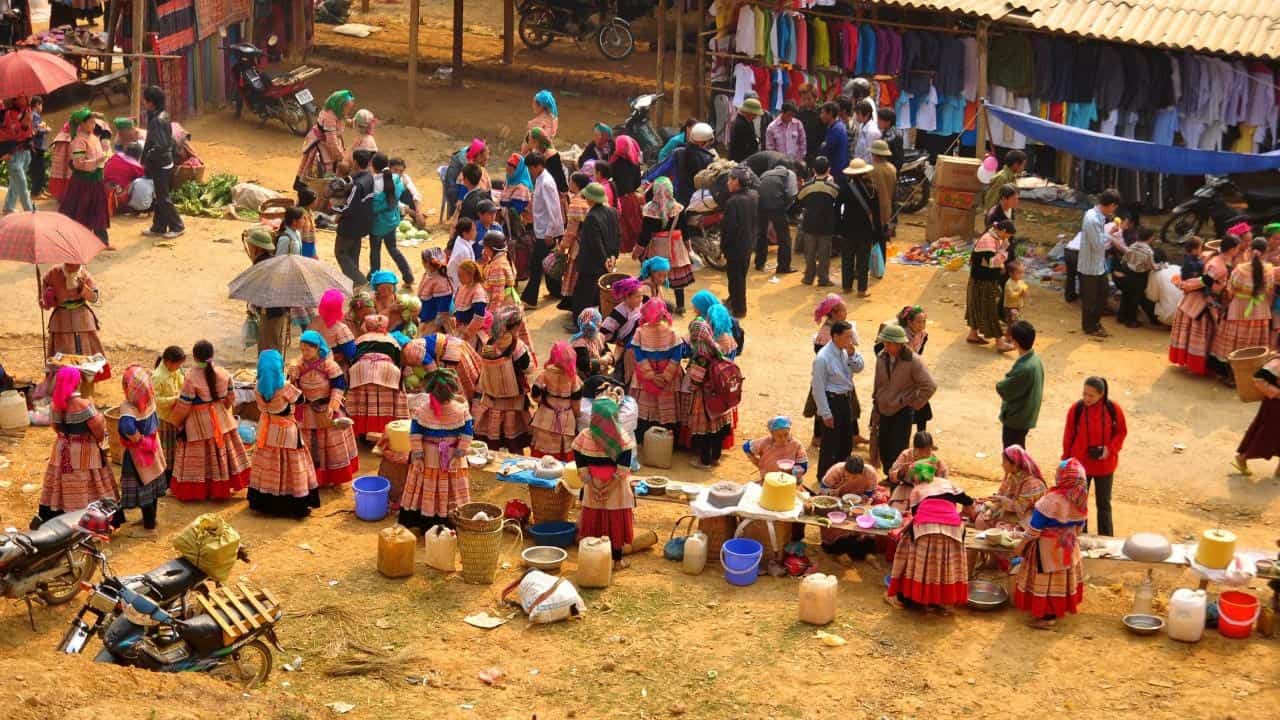
Bac Ha Sunday Market is known as a weekly gathering, and food stalls are generally connected to the market’s operating period. The precise selection and busiest times can vary.
Arrive in the morning
Arriving in the morning is a practical choice if you want to explore the market, look at food stalls, and see the trading activity before leaving for nearby attractions.
Allow enough time for breakfast or an early meal, especially if you are traveling from Sapa or another town.
Check the market schedule
Before traveling, confirm the current market day and local arrangements. Public holidays, weather, transport conditions, and local events can affect travel plans.
If food is a major reason for your visit, ask your accommodation or tour operator about the best time to arrive and which food experiences are likely to be available.
How to Eat at Bac Ha Market Like a Responsible Traveler
A market visit can support local livelihoods and create opportunities for cultural exchange when approached thoughtfully.
Ask before taking photographs
Food stalls are workplaces. Ask before photographing vendors, customers, or the preparation of a dish. Respect anyone who declines.
Pay fairly and confirm prices
Ask the price before ordering, particularly if the menu is not displayed. Pay the agreed amount and avoid treating small price differences as an invitation to bargain aggressively.
Avoid food waste
Order portions you can finish. If you want to try several dishes, consider sharing with companions rather than buying more than you can eat.
Respect local customs
Observe how people queue, order, and eat. If you are unsure about a custom, ask politely or follow the guidance of a local host.
Be flexible
Not every dish will be available on every market day. Treat the experience as an opportunity to discover what is being prepared locally rather than as a checklist that must be completed.
How to Combine Bac Ha Market Food with a Cultural Trip
Food is only one part of the Bac Ha experience. Travelers can also explore local markets, traditional crafts, nearby villages, and historical sites in the surrounding region.
A well-planned itinerary can combine a morning at the market with other stops, depending on travel time and current access arrangements.
For example, visitors may be interested in learning about Flower Hmong culture, exploring the history of Hoang A Tuong Palace, or arranging a village visit in the Bac Ha area.
Read our related guides:
- Bac Ha Sunday Market: A Complete Guide for Visitors
- Flower Hmong Culture in Bac Ha
- Hoang A Tuong Palace: History and Travel Guide
- Ban Pho Village: Experience Local Life in Bac Ha
If you would like to combine food, local culture, and mountain scenery, explore our Sapa on a Sunday tour. Check the current itinerary and inclusions with the tour operator before booking, especially if you want specific food stops or village experiences.
Frequently Asked Questions
What is the most famous food at Bac Ha Market?
Thang co is one of the best-known traditional dishes associated with highland markets in Northern Vietnam. Other foods and drinks may be available depending on the vendors and the season.
Is Bac Ha Market suitable for vegetarians?
Some vendors may offer rice, vegetables, or other meat-free foods, but vegetarian choices can be limited. Ask about broth, sauces, cooking oil, and shared cooking equipment if you follow a strict vegetarian diet.
Is street food at Bac Ha Market safe to eat?
Food safety depends on how each dish is prepared, stored, and served. Choose freshly cooked food served hot, observe basic hygiene, and avoid items that have been left uncovered or stored at unsuitable temperatures.
How much money should I bring for food?
Costs depend on the dishes you choose and current vendor prices. Bring Vietnamese dong in small denominations, ask prices before ordering, and carry extra cash if you plan to buy handicrafts or travel onward.
Can I find vegetarian or vegan food at Bac Ha Market?
You may find some rice and vegetable-based options, but fully vegan dishes are not guaranteed. Ask vendors about animal products in broth, sauces, and seasonings.
Do I need a guide to explore Bac Ha Market?
You can explore the public market independently, but a knowledgeable local guide may help explain unfamiliar dishes, cultural context, and travel logistics. A guide is especially useful if you want to combine the market with village visits.
Can I visit Bac Ha Market from Sapa?
Yes, travelers can plan road transport between Sapa and Bac Ha. The journey takes time, so check current road conditions, transport schedules, and the market timetable before arranging a day trip.
Final Thoughts
Bac Ha Market is a rewarding place to explore the food culture of Northern Vietnam. From traditional highland dishes and corn-based foods to fresh produce and regional drinks, the market offers a glimpse into the ingredients and culinary traditions of the Bac Ha area.
The best approach is to arrive with an open mind, ask questions respectfully, and enjoy what is available that day. You do not need to try every dish to appreciate the market. Sometimes a simple bowl of noodles, a conversation with a vendor, or learning how a traditional ingredient is prepared can become the most memorable part of the visit.
If you are planning a trip to Northern Vietnam, consider combining Bac Ha’s food culture with local markets, village experiences, and the mountain landscapes around Sapa.
Explore Northern Vietnam beyond the usual tourist trail with Less Touristy Tour Vietnam. Visit our Sapa on a Sunday tour page to learn more about the available itinerary and discuss your travel plans.