

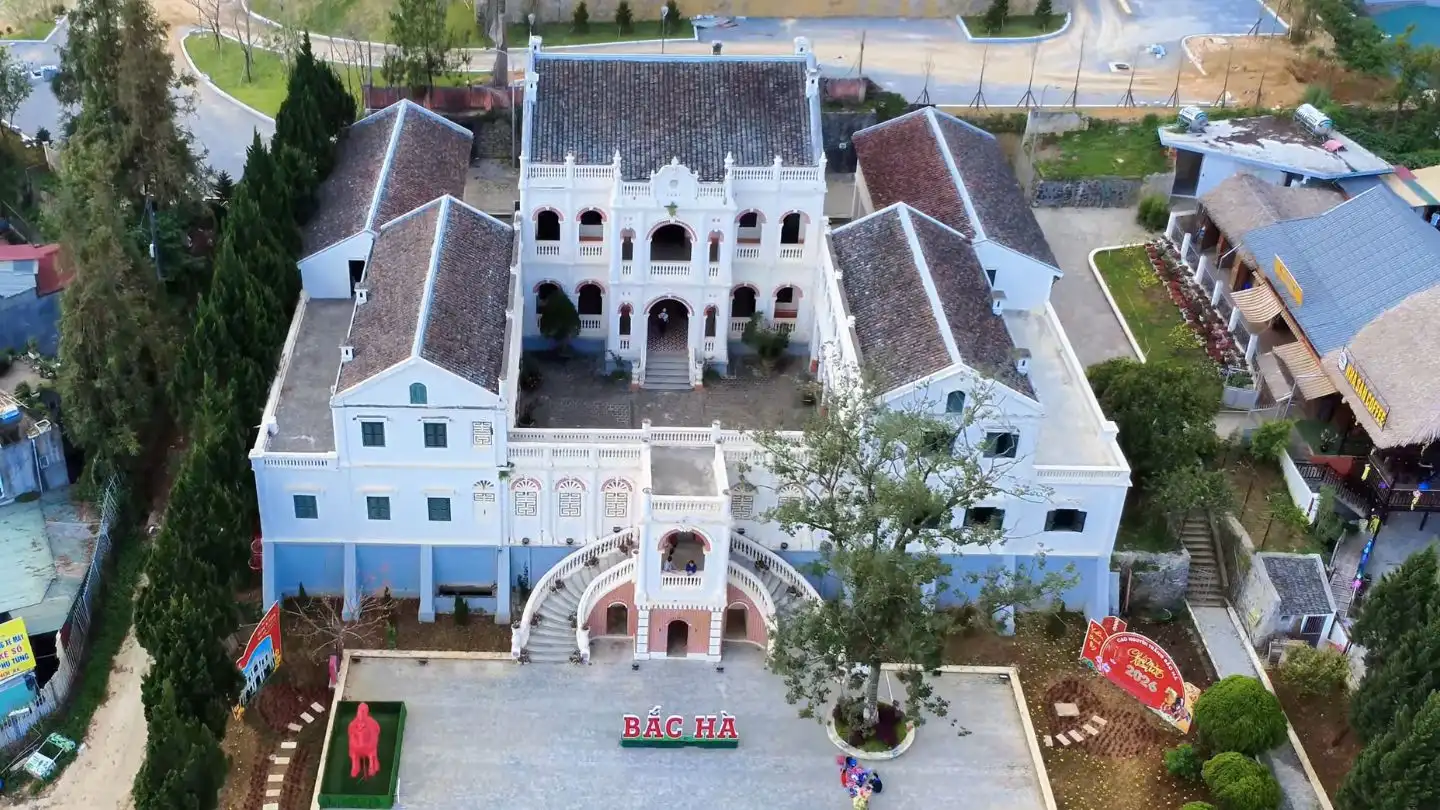
Hoang A Tuong Palace: History, Architecture and Travel Guide
Northern Vietnam is known for its dramatic mountains, colorful ethnic markets, and villages where traditional ways of life remain an important part of the local landscape. Yet the region also holds fascinating historical landmarks that reveal another side of its past.
One of these landmarks is Hoang A Tuong Palace in Bac Ha, a distinctive historic residence surrounded by the mountains of Lao Cai Province. With its unusual architectural design, spacious courtyard, and connections to the history of the local highlands, the palace offers an interesting stop for travelers exploring Northern Vietnam.
Often included in visits to Bac Ha and its famous Sunday market, Hoang A Tuong Palace provides more than a photographic backdrop. It offers an opportunity to learn about the people, social structures, and historical changes that shaped the region.
Whether you are planning a cultural trip, exploring Northern Vietnam independently, or looking for attractions beyond Sapa’s main tourist areas, this guide covers the palace’s history, architecture, practical travel tips, and nearby places worth visiting.
Where Is Hoang A Tuong Palace?
Hoang A Tuong Palace is located in Bac Ha town, in the mountainous region of Lao Cai Province, Northern Vietnam.
Bac Ha is known for its highland scenery, traditional markets, ethnic diversity, and rural landscapes. Compared with major urban destinations, the town offers a different perspective on Northern Vietnam, where local commerce and community traditions remain closely connected to the surrounding countryside.
The palace is one of the area’s best-known historical attractions and can be combined with a visit to Bac Ha Sunday Market or nearby villages.
Travelers staying in Sapa may also consider visiting Bac Ha as part of a longer Northern Vietnam itinerary. However, the two destinations are separated by a road journey, so transportation and timing should be planned carefully.
The History of Hoang A Tuong Palace
Hoang A Tuong Palace is associated with Hoang Yen Chao, a prominent local figure in the history of Bac Ha, and his family. The building reflects a period when local power structures, regional trade, and wider political influences shaped life in the northern highlands.
The palace was constructed during the early twentieth century, commonly dated to the period around 1914–1921. Its history is connected to the social and political circumstances of the region during that era.
Who Was Hoang Yen Chao?
Hoang Yen Chao was a powerful local landholder associated with Bac Ha during the colonial period. His position reflected the complex relationships between local authorities, land ownership, regional communities, and the French colonial administration.
The history of powerful local families in Northern Vietnam cannot be understood through architecture alone. Their residences also reflected economic resources, political relationships, and the social structures of their time.
A visit to the palace therefore provides an opportunity to consider how authority and wealth were expressed in the built environment.
Why Was the Palace Built?
Large residences served practical and symbolic purposes. They provided accommodation for the household, spaces for receiving visitors, and a visible expression of status.
Hoang A Tuong Palace’s substantial layout and formal architectural features suggest that it was intended to be both a residence and a prominent center of household life.
Its scale contrasts with many traditional homes in the surrounding rural landscape, making it a striking reminder of the region’s historical social differences.
A Landmark That Reflects a Changing Region
The history of Bac Ha has been shaped by ethnic diversity, trade, agriculture, political change, and connections with the wider world.
Hoang A Tuong Palace stands as a physical reminder of one period in that history. Its continued presence allows modern visitors to explore how architecture can reveal aspects of power, social organization, and changing cultural influences.
For a deeper understanding, consider the palace alongside the town’s market traditions and the everyday lives of surrounding communities.
What Makes Hoang A Tuong Palace’s Architecture Unique?
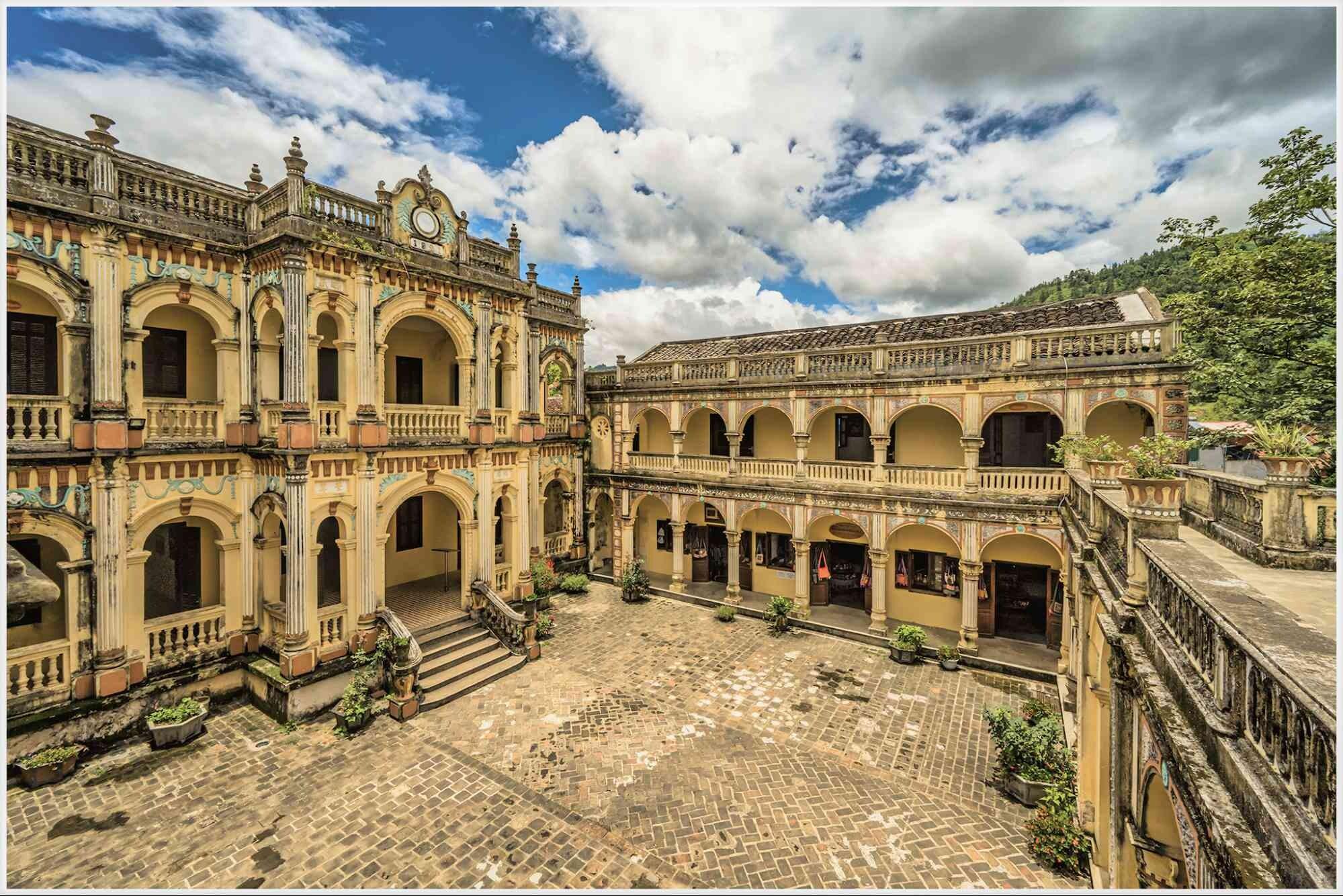
One of the most interesting aspects of Hoang A Tuong Palace is its architectural character.
The building combines European-inspired elements with influences associated with East Asian architectural traditions. This combination gives the palace a distinctive appearance compared with many other historical buildings in Northern Vietnam.
European Architectural Influences
Visitors may notice elements such as symmetrical layouts, formal facades, arched openings, and balanced proportions.
These features create an organized visual composition and distinguish the palace from many vernacular residential buildings in the region.
The overall design reflects the wider architectural exchanges that took place during the colonial period, when European styles influenced buildings across Vietnam.
East Asian Design Elements
The palace also incorporates features associated with East Asian architectural traditions.
The combination of different influences makes the building particularly interesting for visitors who enjoy architectural history. Rather than fitting neatly into a single style, the residence reflects a mixture of design ideas and local adaptation.
The exact interpretation of individual features is best understood through reliable historical information or explanations provided at the site.
The Courtyard and Building Layout
The palace’s courtyard and surrounding structures contribute to its formal appearance.
The layout creates a sense of separation between the entrance area and the interior spaces, while the arrangement of the buildings provides opportunities to observe the relationship between the architecture and the surrounding environment.
As you explore, look at how the entrances, windows, exterior walls, and courtyard work together to create the overall composition.
These details can be especially rewarding for visitors interested in architecture and photography.
What Can You See Inside Hoang A Tuong Palace?
The experience of visiting the palace depends on current access arrangements and which areas are open to visitors.
Depending on the available exhibits, you may be able to explore interior spaces, architectural details, and displays related to the building’s history.
Historic Rooms and Interior Spaces
Interior rooms can help visitors imagine how the residence was organized and used.
Pay attention to the layout, openings, structural details, and relationship between indoor and outdoor spaces. These elements often reveal how a building accommodated domestic activities and formal gatherings.
Access to individual rooms may vary, so follow the site’s visitor instructions.
Architectural Details for Photography
Hoang A Tuong Palace is a rewarding place for travelers who enjoy architectural photography.
The facade, courtyard, doorways, and contrasting architectural elements offer different compositions throughout the day.
For the best results, take time to look beyond the main entrance. Wider photographs can show the building’s overall proportions, while closer images can highlight decorative details.
Be respectful of other visitors and follow any restrictions on photography inside the building.
Historical Displays and Interpretation
If historical displays or explanatory materials are available during your visit, use them to understand the palace’s context rather than relying solely on its appearance.
Architecture can tell part of a story, but historical interpretation helps explain who built a structure, how it was used, and what it represents in the wider history of the region.
If you are visiting with a guide, ask questions about the palace’s original function, its owners, and the historical changes that affected Bac Ha.
Is Hoang A Tuong Palace Worth Visiting?
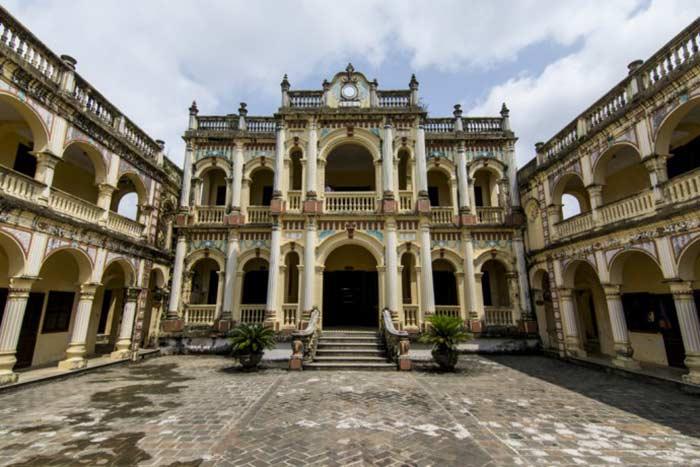
For many travelers, Hoang A Tuong Palace is worth including in a Bac Ha itinerary, particularly if they enjoy history, architecture, and cultural attractions.
It provides a contrast with the area’s natural scenery and traditional market life.
For History Enthusiasts
The palace offers an introduction to local power structures and architectural influences during the early twentieth century.
It can be especially interesting when combined with other historical and cultural experiences in Bac Ha.
For Architecture Lovers
The building’s combination of architectural influences, formal layout, and distinctive exterior makes it a worthwhile stop for visitors interested in historic structures.
You do not need specialized knowledge of architecture to appreciate the design. Simply observing the proportions, details, and courtyard can make the visit more engaging.
For Photographers
The facade and courtyard offer opportunities for architectural photography.
Try capturing both wide views and smaller details. The surrounding town and mountain environment can also help place the building within its broader setting.
For Travelers Interested in Local Culture
The palace can complement a visit to Bac Ha Sunday Market, where everyday trade and community interaction offer a different perspective on the region.
Together, the two experiences help travelers understand that Northern Vietnam’s cultural landscape includes both historic landmarks and living community traditions.
Best Time to Visit Hoang A Tuong Palace
Hoang A Tuong Palace can be visited at different times of the year, but your experience will depend on weather, local conditions, and the wider itinerary.
Spring
Spring can bring relatively cool conditions and seasonal changes in the surrounding countryside.
It can be a pleasant time to explore Bac Ha, although weather may vary and mornings can remain chilly.
Summer
Summer offers greener landscapes in many parts of Northern Vietnam, but rainfall can affect road journeys and outdoor plans.
Bring suitable rain protection and allow extra time for travel if you are visiting several attractions in one day.
Autumn
Autumn can offer comfortable conditions for exploring the region, depending on the weather.
Travelers who are also interested in mountain scenery and rice terraces may wish to combine a visit to the palace with countryside excursions.
Winter
Winter can be cold in the highlands, especially in the morning and evening.
Bring warm clothing and check the forecast before setting out.
Should You Visit on Sunday?
Sunday is a particularly convenient day to visit Bac Ha if you also want to experience the town’s traditional weekly market.
You can plan your day around the market and include Hoang A Tuong Palace as an additional cultural attraction, provided the opening arrangements and available time suit your itinerary.
Confirm the palace’s current visiting hours before traveling, as schedules may change.
How to Get to Hoang A Tuong Palace
The best way to reach Hoang A Tuong Palace depends on where you are staying and how many other attractions you plan to visit.
Traveling From Bac Ha Town Center
If you are already in Bac Ha, the palace is a convenient attraction to include in a town visit.
Check your accommodation’s directions or use a current map to identify the appropriate route. Local transport options and walking conditions may vary.
Traveling From Sapa
Traveling from Sapa requires a road journey to Bac Ha. The journey time depends on the route, traffic, weather, and transport arrangements.
If your main objective is to visit Bac Ha Sunday Market, arrange transportation so you can arrive during the morning market period.
A day trip may be possible, but travelers should account for the return journey and time needed to explore the town.
Joining an Organized Tour
An organized tour may simplify transportation and help you combine multiple attractions without coordinating every transfer independently.
This can be particularly useful if you want to visit the Sunday market, explore the palace, and continue to other destinations in the Northern Vietnam highlands.
Before booking, confirm whether Hoang A Tuong Palace is specifically included in the itinerary. Not every tour that visits Bac Ha necessarily includes admission or a guided visit to the palace.
What Else Can You Visit Near Hoang A Tuong Palace?
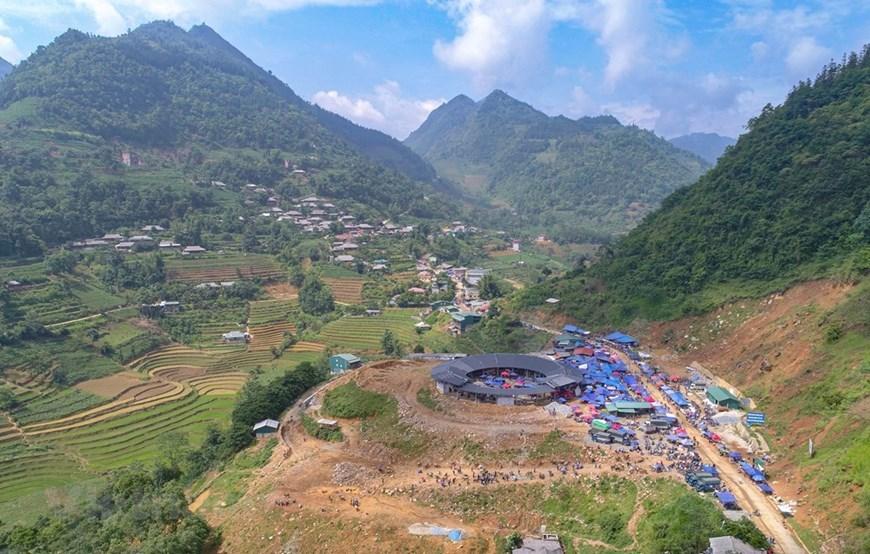
One of the advantages of visiting the palace is that it can form part of a broader cultural itinerary.
Bac Ha Sunday Market
Bac Ha Sunday Market is one of the region’s most recognizable attractions.
The weekly market brings together people from surrounding communities to trade goods, purchase food, and socialize. Depending on the stalls present, visitors may find textiles, clothing, fresh produce, household items, and regional dishes.
Sunday morning is generally the best time to experience the main market activity.
For more practical information, read our guide to Bac Ha Sunday Market before planning your visit.
Ban Pho Village
Ban Pho is associated with local highland culture and traditional corn wine production.
The surrounding area offers opportunities to observe rural landscapes and village life. If you visit residential areas, respect private property and ask before photographing residents.
A visit to Ban Pho can complement the palace by offering a different perspective on the cultural and agricultural environment around Bac Ha.
Sapa and the Muong Hoa Valley
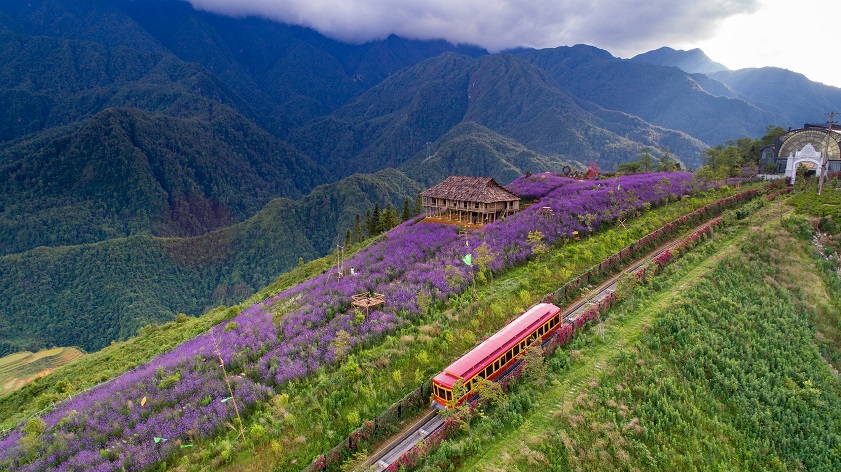
Sapa provides another dimension to a Northern Vietnam trip, with mountain scenery, terraced rice fields, and village trekking routes.
Areas around Y Linh Ho, Lao Chai, and Ta Van are popular with travelers interested in walking through the countryside and learning about the region’s diverse communities.
Because Sapa and Bac Ha are separate destinations, combining them requires realistic transportation planning.
Practical Tips for Visiting Hoang A Tuong Palace
A little preparation can make your visit more comfortable.
- Check opening hours: Confirm current visiting times and admission arrangements before traveling.
- Bring cash: Cash can be useful for entrance fees, local transport, and small purchases.
- Wear comfortable shoes: You may be walking around the courtyard and exploring nearby parts of town.
- Bring weather-appropriate clothing: The highlands can be cool or rainy, depending on the season.
- Respect site rules: Follow restrictions concerning photography, restricted rooms, and historic structures.
- Allow enough time: Combine the palace with nearby attractions only after accounting for transport and the time needed at each stop.
- Consider a guide: A knowledgeable guide can provide context that is difficult to obtain from photographs alone.
If you are planning a short trip, confirm the details in advance so you can enjoy the palace without rushing through the rest of your itinerary.
How to Experience Bac Ha Beyond the Usual Tourist Stops
Hoang A Tuong Palace is one part of a broader destination that combines history, local trade, mountain scenery, and cultural diversity.
To make the most of a visit, consider balancing the palace with experiences that show different aspects of Bac Ha.
You might explore the palace’s architecture, sample a regional dish, visit the Sunday market, or travel through nearby rural areas.
This combination creates a more complete picture of the region than visiting a single landmark in isolation.
It is also worth approaching local communities respectfully. Ask permission before taking photographs, buy products thoughtfully, and remember that markets and villages are places where people live and work.
For travelers who value cultural discovery, these small details can make the journey more meaningful.
Explore Bac Ha and Sapa With Less Touristy Tour Vietnam
Hoang A Tuong Palace offers a fascinating glimpse into the history and architectural diversity of Northern Vietnam.
Its distinctive design and connection to Bac Ha’s past make it an interesting stop for travelers who want to understand more about the region beyond its mountain scenery.
Combined with Bac Ha Sunday Market, local villages, and Sapa’s trekking landscapes, the palace can become part of a varied journey through the northern highlands.
If you want to combine cultural discovery with scenic exploration, explore the Sapa on a Sunday: A Perfect Blend of Culture and Scenic Beauty tour by Less Touristy Tour Vietnam.
Review the current itinerary to confirm whether the palace is included, along with the market visit, transportation, accommodation, and other services.
Ready to explore Northern Vietnam’s cultural and scenic highlights?
Discover the Sapa on a Sunday Tour and start planning your journey through mountain landscapes, traditional markets, and historic destinations.
Frequently Asked Questions About Hoang A Tuong Palace
1. Where is Hoang A Tuong Palace located?
Hoang A Tuong Palace is located in Bac Ha town in Lao Cai Province, Northern Vietnam.
2. Who built Hoang A Tuong Palace?
The palace is associated with Hoang Yen Chao and his family. Its construction is commonly dated to the early twentieth century, around 1914–1921.
3. Why is Hoang A Tuong Palace famous?
The palace is known for its distinctive combination of European-inspired and East Asian architectural elements, its historical associations, and its prominent place in Bac Ha.
4. How long should I spend at Hoang A Tuong Palace?
The time required depends on your interest in architecture, history, and photography. Allow enough time to explore the building and its surroundings, while accounting for other attractions on your itinerary.
5. Can I visit Hoang A Tuong Palace and Bac Ha Sunday Market on the same day?
Yes, these attractions can be combined in one day if their opening arrangements and your transport schedule allow. Visiting the market in the morning and the palace afterward may be a practical approach, but confirm current timings before departure.
6. Is Hoang A Tuong Palace suitable for families?
It can be an interesting stop for families interested in history and architecture. Parents should supervise children around historic structures and follow any visitor restrictions.
7. Can I visit Hoang A Tuong Palace from Sapa?
Yes, it can be included in a journey from Sapa to Bac Ha, but the road journey takes time. Plan transportation carefully, particularly if you also want to visit the Sunday market.
8. What other attractions should I visit in Bac Ha?
Bac Ha Sunday Market and Ban Pho Village are possible additions to a palace visit. Travelers with more time may also combine Bac Ha with Sapa’s mountain villages and trekking routes.